

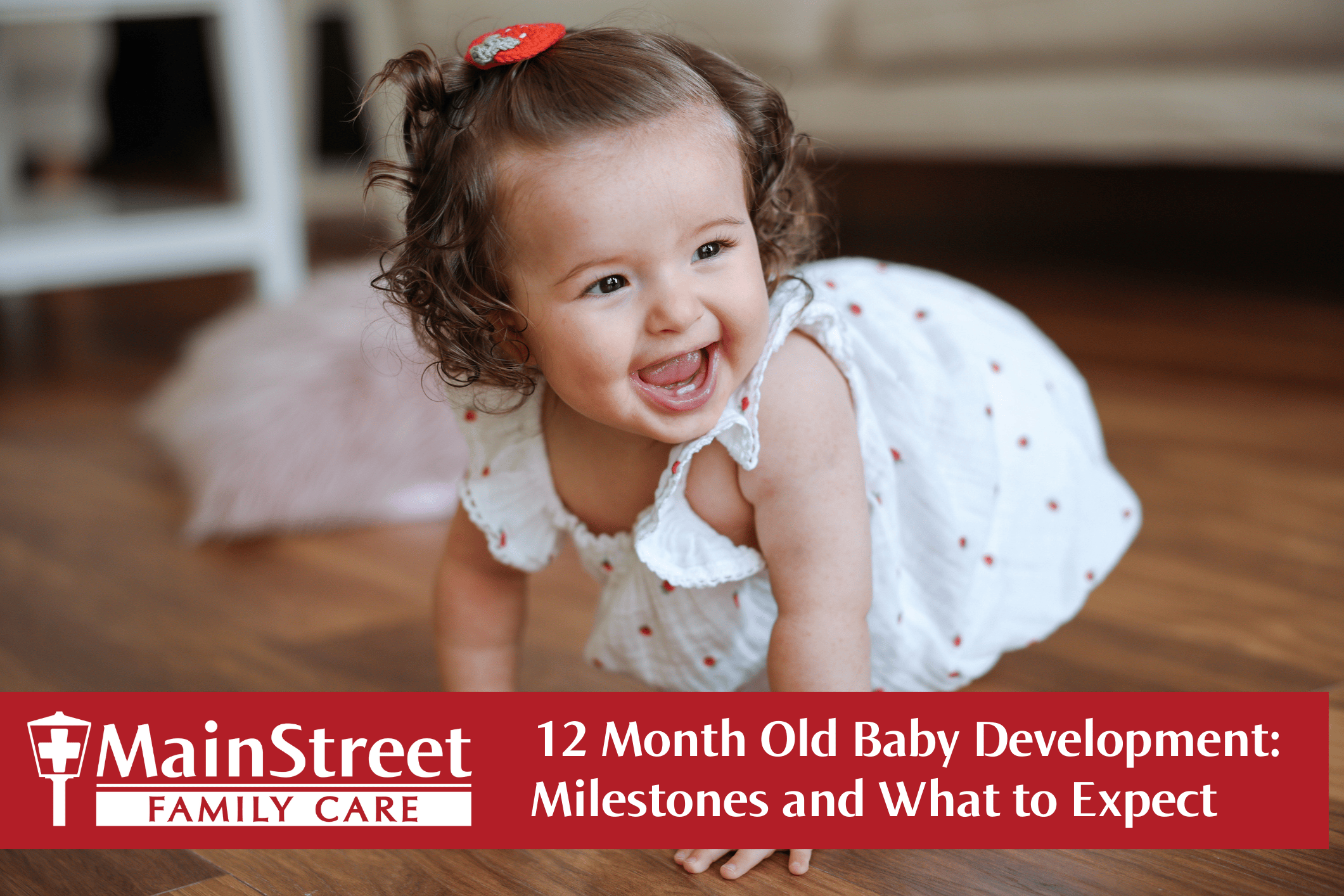
Your baby’s first birthday is an exciting milestone for families. By 12 months old, many babies are becoming more independent, curious, and interactive. Parents often notice significant changes in movement, communication, and problem-solving during this stage.
While every child develops at their own pace, understanding common 12 month baby milestones can help you recognize typical progress and know when it may be helpful to speak with a provider.
At MainStreet Family Care, we care for patients of all ages, including infants and young children. Our providers are here to support families as children grow and reach new developmental stages.
Physical Development at 12 Months
Around the one-year mark, many babies are developing stronger coordination and balance. Increased muscle strength allows them to explore their surroundings more actively.
Many babies at this age are able to:
-
Pull themselves up to stand using furniture
-
Cruise along furniture while holding on
-
Stand briefly without support
-
Take a few independent steps or begin walking
-
Pick up small objects using their thumb and finger
Some babies may already be walking, while others are still practicing standing or cruising. Both are considered normal at this stage.
Encouraging safe movement and supervised exploration helps babies build confidence and coordination.
Social and Emotional Development
At 12 months, babies often become more expressive and connected with the people around them. Their personalities may become more noticeable as they interact with caregivers and explore their environment.
Common social milestones include:
-
Showing affection toward familiar people
-
Displaying clear preferences for certain toys or activities
-
Becoming cautious around unfamiliar people
-
Seeking comfort from parents or caregivers
-
Responding to simple requests
These early social behaviors help children develop trust and emotional security.
Communication and Language Development
Language skills continue to develop quickly during the first year.
By 12 months, many babies begin using simple words and gestures to communicate their needs.
You may notice your baby:
-
Saying simple words such as “mama” or “dada”
-
Using gestures like waving or pointing
-
Responding to their name
-
Understanding simple instructions such as “come here”
-
Attempting to imitate sounds or words
Talking, reading, and singing regularly can help support early language development and encourage communication skills.
Cognitive Development and Curiosity
One-year-olds are naturally curious and eager to explore the world around them. Their problem-solving abilities continue to develop as they experiment with objects and their environment.
Many babies at this age begin to:
-
Explore objects in different ways such as shaking, dropping, or stacking
-
Look for hidden objects during play
-
Observe how objects move or make sounds
-
Copy actions they see others perform
These early learning experiences help strengthen memory, attention, and problem-solving skills.
Feeding and Nutrition at 12 Months
By their first birthday, many babies are eating a wider variety of foods and becoming more comfortable feeding themselves.
Common feeding milestones include:
-
Eating soft table foods with the family
-
Practicing self-feeding with fingers
-
Drinking from a cup with assistance
-
Trying a variety of textures and flavors
Breast milk or formula may still be part of a child’s diet, but many families begin transitioning to whole milk around this age. Your provider can offer guidance based on your child’s nutritional needs.
Sleep Patterns at 12 Months
Sleep schedules often become more predictable around the first birthday.
Many 12 month olds:
-
Sleep about 11–12 hours at night
-
Take one to two naps during the day
-
Follow more consistent bedtime routines
Some children may experience temporary sleep disruptions due to developmental changes or separation anxiety. Maintaining consistent sleep routines can help encourage healthy sleep habits.
When to Talk With a Provider
Children develop at different rates, and small variations in milestones are normal. However, there are times when it may be helpful to speak with a provider about development.
Consider discussing development with a healthcare provider if your child:
-
Does not crawl or attempt to move around independently
-
Cannot stand with support
-
Does not use gestures such as waving or pointing
-
Does not respond to their name
-
Shows little interest in interacting with caregivers
If you ever have questions or concerns about your child’s development, seeking guidance can help provide reassurance and support.
Supporting Your Child’s Development
Parents and caregivers play an important role in helping children learn and grow.
Activities that support development at this stage include:
-
Encouraging safe movement and exploration
-
Talking and reading to your child daily
-
Offering toys that promote problem-solving and coordination
-
Playing interactive games together
-
Providing opportunities to practice new skills like standing or walking
These everyday interactions help support physical, social, and cognitive development.
You can also explore our full guide to baby development during the first year.
We’re Here to Support Your Family
At MainStreet Family Care, we understand that your child’s first year brings many exciting milestones along with plenty of questions. Our providers are here to support families with compassionate, convenient care.
We offer urgent care services for the entire family, are open 7 days a week, and accept most major insurance plans, including Medicaid and TRICARE. You can walk in anytime or register online to save your spot in line and reduce your in-clinic wait time.