

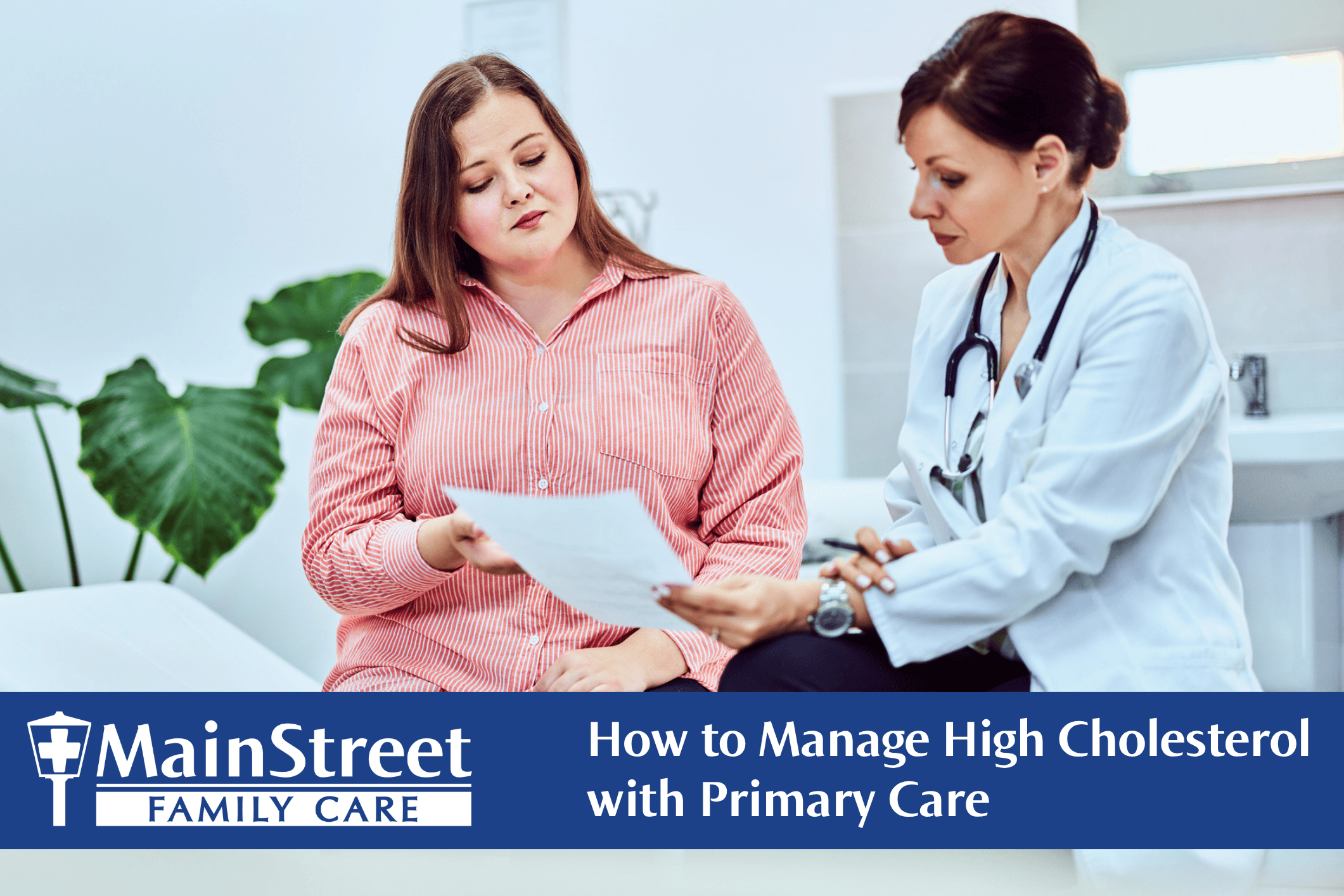
“Cholesterol” can feel like a scary word, especially when it comes up during an annual checkup.
If your numbers are higher than expected, it can be concerning. The good news is that high cholesterol is very common and very manageable with the right approach and support from a primary care provider.
What High Cholesterol Means
Cholesterol is a type of fat found in your blood. Your body needs some cholesterol to function properly, but too much can lead to buildup in your arteries.
Over time, high cholesterol can increase your risk for:
-
Heart disease
-
Stroke
-
Circulation problems
Several factors can contribute to higher cholesterol levels, including:
-
Family history
-
A sedentary lifestyle
-
Diet high in saturated fats
-
Smoking
-
Excess weight
Because cholesterol does not typically cause symptoms, regular screenings are important for early detection. In fact, you can feel completely fine while your levels are quietly rising. That’s why regular checkups are so important.
Lifestyle Changes That Help Lower Cholesterol
For many patients, managing cholesterol starts with lifestyle changes, which can have a meaningful impact on your levels.
Helpful habits include:
-
Eating a heart healthy diet with more fiber and fewer saturated fats
-
Maintaining a healthy weight
-
Limiting processed foods
-
Avoiding tobacco use
- Staying physically active, even if it starts with a daily walk
These changes can improve cholesterol levels and support overall heart health.
When Lifestyle Changes Are Not Enough
In some cases, lifestyle changes alone may not be enough to bring cholesterol levels into a healthy range.
A provider may recommend medication to help manage cholesterol more effectively. There are several types of medications available, and your provider will determine the best option based on your health history and risk factors.
Ongoing monitoring is important to ensure your treatment plan is working as intended.
How a Primary Care Provider Helps Manage Cholesterol
One of the most important parts of managing cholesterol is consistency over time.
A primary care provider can:
-
Order and review routine lab work
-
Track cholesterol levels over time
-
Recommend lifestyle changes
-
Prescribe and adjust medications if needed
Having a provider who understands your overall health helps ensure your care stays on track.
When to Get Your Cholesterol Checked
Routine screening is one of the most important steps in prevention.
You should consider regular cholesterol checks if you:
-
Have a family history of high cholesterol or heart disease
-
Are over the age of 40
-
Have conditions such as high blood pressure or diabetes
-
Have not had recent lab work
Even if you feel well, screening can identify concerns early.
You can also learn more about what to expect during routine care in our guide to annual physicals.
When to Seek Care
It is important to speak with a provider if:
-
Your cholesterol levels are elevated
-
You have not been checked recently
-
You have other risk factors for heart disease
If you are unsure, it is always appropriate to get evaluated and discuss your risk.
We’re Here to Support Your Health
At MainStreet Family Care, our providers offer primary care services for adults to help monitor, manage, and treat high cholesterol so you can protect your long-term health. We are open 7 days a week and accept most major insurance plans, including Medicaid and TRICARE.
Whether you are coming in for the first time or continuing your care, we are here to help you feel confident about your health. To get started, sign up for the patient portal and schedule your first appointment.
Sign Up Now!
Step 1: Signup for the Patient Portal
Step 2: Schedule Your First Appointment
Register New Patient Portal Account
If you already have a portal account, simply log in.