

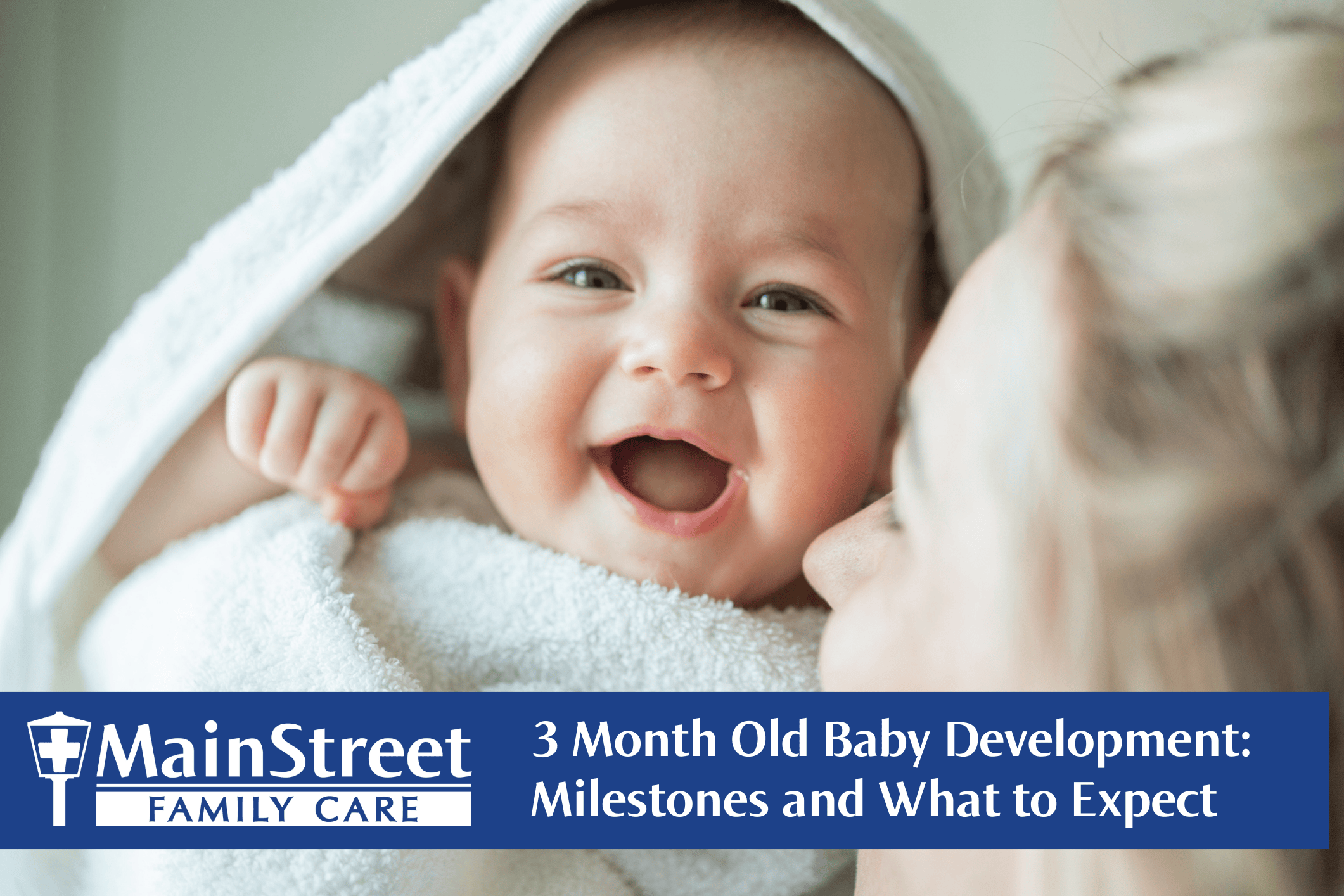
Your baby is growing quickly, and by 3 months old many parents begin noticing new developmental milestones in how their baby moves, communicates, and responds to the world. While every baby develops at their own pace, this stage often brings longer awake periods, more interaction, and the first glimpses of personality.
Understanding common 3 month baby milestones can help you feel more confident about what is typical and when you might want to check in with a provider.
At MainStreet Family Care, we care for patients of all ages, including infants and young children. Our providers are here to support families as they grow.
Physical Development at 3 Months
During the third month of life, babies begin gaining more control over their bodies. Their muscles are becoming stronger, particularly in the neck, shoulders, and upper body.
Many babies at this age are able to:
-
Lift their head and chest during tummy time
-
Support their upper body with their arms when placed on their stomach
-
Move arms and legs more purposefully
-
Open and close their hands
-
Bring their hands toward their mouth
You may also notice that your baby’s movements are becoming smoother and less jerky compared to earlier weeks.
Regular tummy time continues to be important at this stage. Short periods throughout the day help strengthen the muscles needed for future milestones like rolling over and sitting up.
Social and Emotional Development
Around 3 months, babies often become much more engaged with the people around them. They begin to recognize familiar faces and may respond differently to parents and caregivers compared to strangers.
Some common social milestones include:
-
Smiling in response to voices or faces
-
Making eye contact during interactions
-
Showing excitement when they see familiar people
-
Beginning to express different emotions
These interactions help strengthen the bond between baby and caregiver and support healthy emotional development.
Communication and Early Language Skills
Even though babies are not speaking yet, communication skills are already developing rapidly.
At 3 months old, many babies begin experimenting with sounds and vocal expression.
You may notice your baby:
-
Cooing or making vowel-like sounds
-
Responding to voices with sounds or smiles
-
Turning their head toward familiar voices
-
Becoming quieter when someone speaks to them
Talking, singing, and reading to your baby can help support early language development and encourage these new communication skills.
Vision and Sensory Development
Your baby’s vision is improving significantly during the first few months of life. By 3 months old, babies are better able to focus on objects and track movement.
Common sensory milestones at this stage include:
-
Following moving objects with their eyes
-
Watching faces closely
-
Becoming interested in bright colors and patterns
-
Reaching toward objects within view
Babies may also begin exploring the world by bringing their hands or toys toward their mouth, which is a normal part of sensory development.
Sleep Patterns at 3 Months
Sleep patterns can begin to shift around this age, although every baby’s schedule will look a little different.
Many 3 month olds:
-
Sleep longer stretches at night compared to the newborn stage
-
Take several naps throughout the day
-
Become more alert during awake periods
It is still common for babies to wake during the night for feeding. Consistent bedtime routines can help support healthy sleep habits as your baby grows.
When to Talk With a Provider
Babies reach milestones at different times, and small variations are completely normal. However, there are some situations where it may be helpful to discuss development with a provider.
Consider speaking with a healthcare provider if your baby:
-
Has difficulty lifting their head during tummy time
-
Does not respond to sounds or voices
-
Rarely makes eye contact
-
Does not smile at people
-
Appears unusually stiff or floppy
If you ever have concerns about your baby’s development, it is always appropriate to ask questions and seek guidance.
Supporting Your Baby’s Development
There are many simple ways parents can support development during the third month.
Helpful activities include:
-
Spending time on the floor together during tummy time
-
Talking and singing to your baby throughout the day
-
Offering age-appropriate toys with bright colors or gentle sounds
-
Holding and interacting with your baby during awake periods
These everyday interactions help build the foundation for physical, cognitive, and emotional growth.
You can also explore our full guide to baby development during the first year.
We’re Here to Support Your Family
At MainStreet Family Care, we understand that parenting comes with many questions, especially during your baby’s first year. Our providers are here to support families with compassionate, convenient care when health concerns arise.
We offer urgent care services for the entire family, are open 7 days a week, and accept most major insurance plans, including Medicaid and TRICARE.