

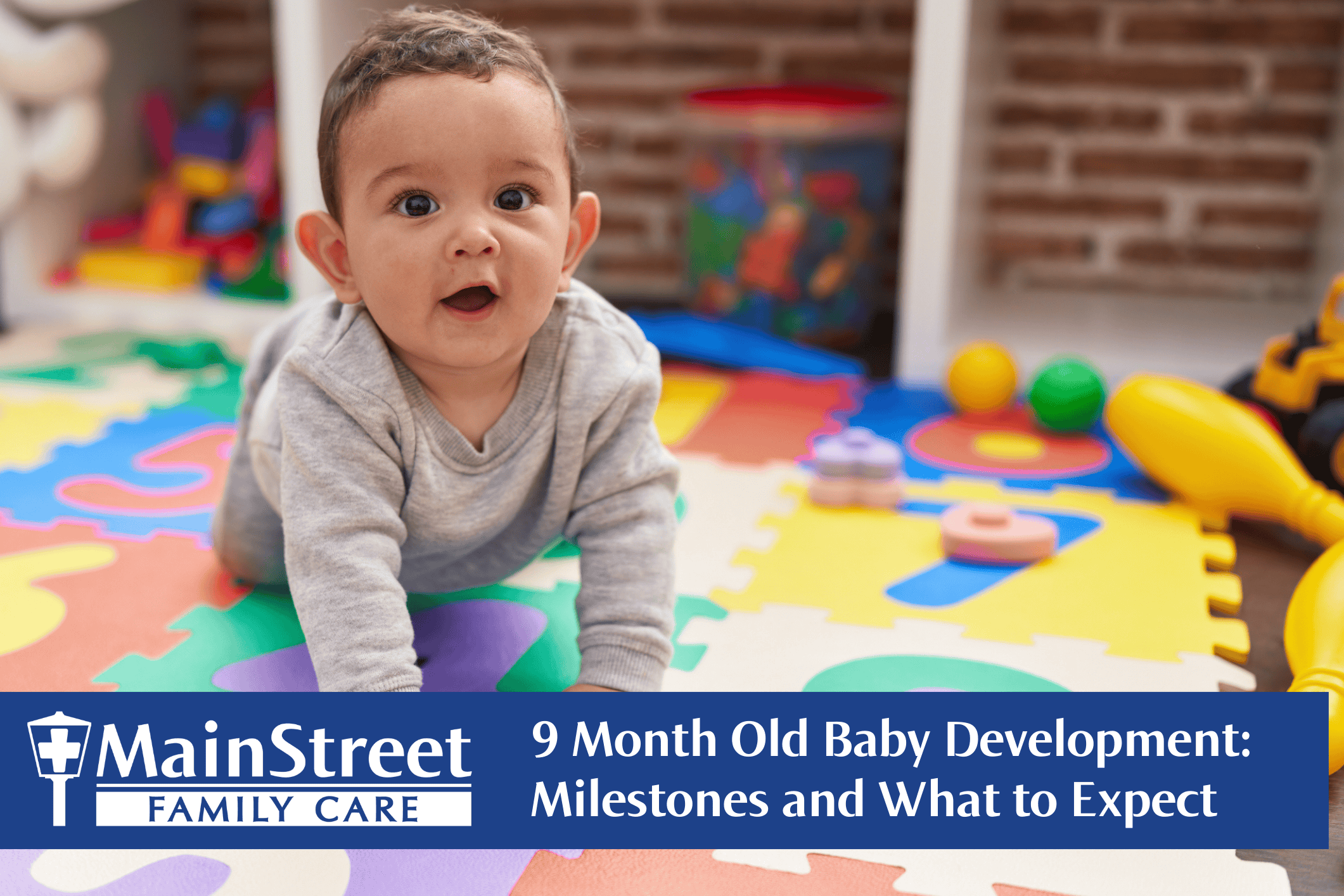
By 9 months old, many babies are becoming more mobile, curious, and eager to explore their surroundings. Parents often notice rapid changes in movement, communication, and problem-solving skills during this stage.
While every baby develops at their own pace, understanding common 9 month baby milestones can help you recognize typical development and know when it may be helpful to speak with a provider.
At MainStreet Family Care, we care for patients of all ages, including infants and young children. Our providers are here to support families as children grow and reach new developmental stages.
Physical Development at 9 Months
During this stage, many babies are learning new ways to move and interact with their environment. Increased muscle strength and coordination allow them to explore more independently.
Many babies at this age are able to:
-
Sit independently without support
-
Roll in both directions
-
Crawl, scoot, or move around the floor in some way
-
Pull themselves up to a standing position while holding onto furniture
-
Pick up small objects using their thumb and fingers
Some babies may begin cruising along furniture or attempting to stand with assistance. These movements help build the coordination needed for future milestones like walking.
Social and Emotional Development
Around 9 months, babies often become more aware of familiar and unfamiliar people. You may notice stronger emotional responses and deeper attachment to caregivers.
Common social milestones include:
-
Showing clear preference for familiar caregivers
-
Becoming cautious or shy around unfamiliar people
-
Enjoying interactive games like peek-a-boo or pat-a-cake
-
Reacting to the emotions of others
-
Seeking comfort from parents or caregivers
These emotional connections help babies build trust and security as they continue to explore the world around them.
Communication and Language Development
Communication skills continue to grow rapidly during the ninth month. Babies often become more expressive and begin experimenting with a wider range of sounds.
You may notice your baby:
-
Babbling with repeated sounds like “ba-ba” or “da-da”
-
Responding to their name
-
Understanding simple words like “no” or “bye-bye”
-
Using gestures such as waving or reaching to be picked up
-
Making sounds to get attention
Talking, reading, and responding to your baby’s sounds can help encourage language development and strengthen early communication skills.
Cognitive Development and Curiosity
At 9 months, babies begin learning how objects and people interact with the world around them. Their curiosity often increases as they explore new environments.
Many babies begin to:
-
Look for objects that have been hidden
-
Explore toys in different ways such as shaking, banging, or dropping
-
Observe how objects move or make sounds
-
Show interest in cause-and-effect activities
These early problem-solving skills help build the foundation for future learning.
Feeding and Nutrition at 9 Months
By this age, many babies are becoming more comfortable eating a wider variety of foods alongside breast milk or formula.
Babies at 9 months may begin:
-
Eating soft finger foods
-
Trying different textures and flavors
-
Drinking small amounts of water from a cup
-
Practicing feeding themselves with their hands
Breast milk or formula should still remain an important part of your baby’s nutrition during this stage.
If you have questions about feeding or introducing new foods, your provider can offer guidance based on your child’s individual needs.
Sleep Patterns at 9 Months
Sleep patterns can vary, but many babies at this age have more predictable routines.
Many 9 month olds:
-
Sleep around 10–12 hours overnight
-
Take one to two naps during the day
-
Develop more consistent bedtime routines
Some babies may experience temporary sleep disruptions due to developmental changes or separation awareness.
Maintaining a consistent bedtime routine can help support healthy sleep habits.
When to Talk With a Provider
Children develop at different rates, and small variations in milestone timing are common. However, there are times when it may be helpful to discuss development with a provider.
Consider speaking with a healthcare provider if your baby:
-
Cannot sit without support
-
Does not attempt to move or explore their environment
-
Does not respond to sounds or their name
-
Shows little interest in interacting with caregivers
-
Does not babble or make vocal sounds
If you ever have concerns about your baby’s development, it is always appropriate to ask questions and seek guidance.
Supporting Your Baby’s Development
There are many simple ways parents and caregivers can support development during the ninth month.
Helpful activities include:
-
Allowing safe floor time for movement and exploration
-
Encouraging reaching, grasping, and crawling
-
Talking, reading, and singing throughout the day
-
Playing interactive games like peek-a-boo
-
Offering toys that encourage movement and curiosity
These everyday interactions help support physical, social, and cognitive growth.
You can also explore our full guide to baby development during the first year.
We’re Here to Support Your Family
At MainStreet Family Care, we understand that your baby’s first year is filled with exciting milestones and plenty of questions. Our providers are here to support families with compassionate, convenient care.
We offer urgent care services for the entire family, are open 7 days a week, and accept most major insurance plans, including Medicaid and TRICARE. You can walk in anytime or register online to save your spot in line and reduce your in-clinic wait time.