

Summary
- Learn common signs of sprains and broken bones.
- Understand when an X-ray may be needed.
- Know when an injury should go to the ER.
- Find out how urgent care can help with minor injuries.
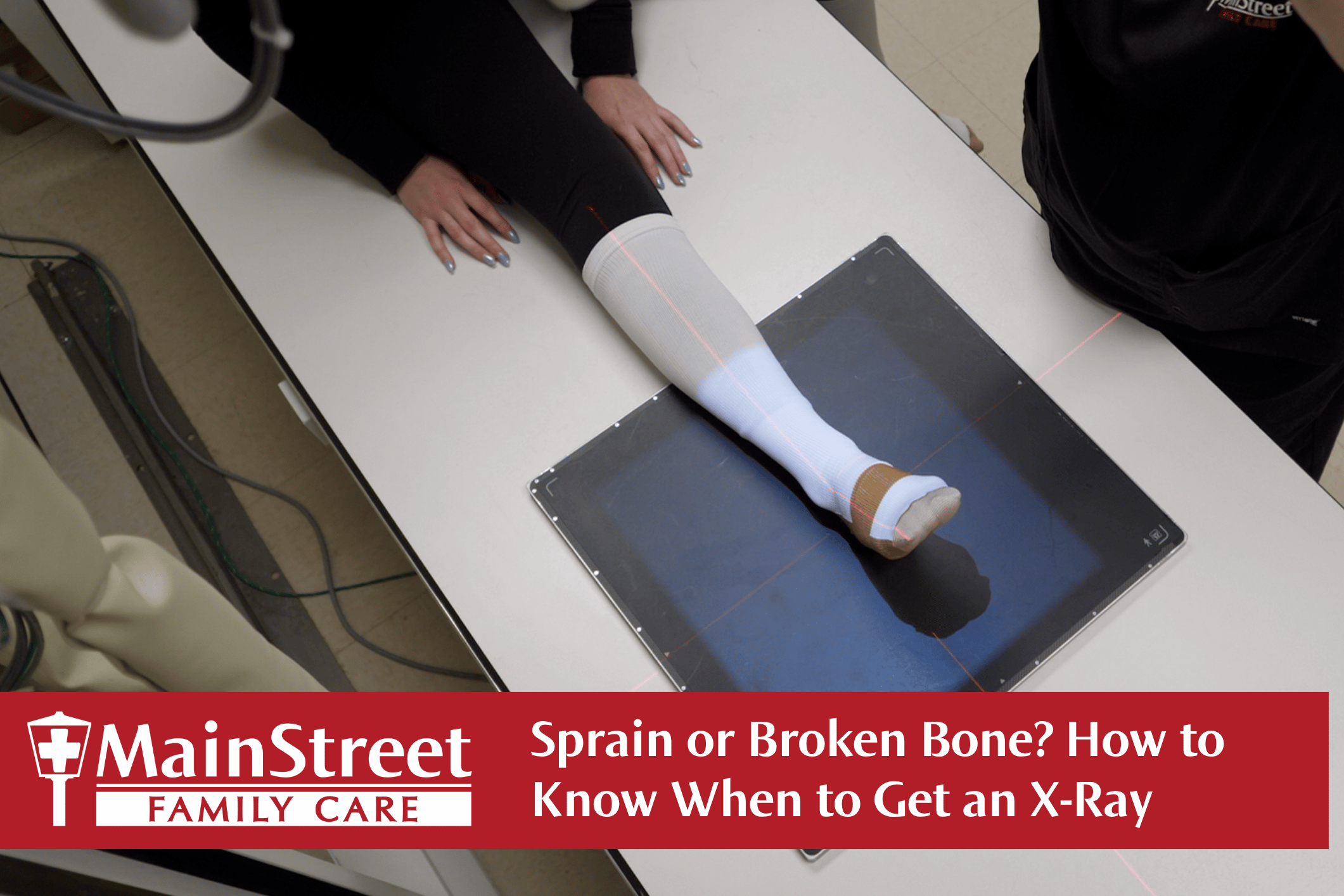
Sprain or Broken Bone? How to Know When to Get an X-Ray
A fall, a twisted ankle, or a hard bump can leave you wondering what is really going on underneath the skin. Pain, swelling, and bruising can show up with both a sprain and a broken bone, so it’s not always easy to tell the two apart right away.
Fortunately, you don’t have to guess. This guide walks through common signs of each type of injury and when it may be time to get an X-ray from a medical provider.
Common Signs of a Sprain
A sprain happens when a ligament, the tissue that connects bones, gets stretched or torn. Common signs include:
- Pain around a joint, such as an ankle, wrist, or knee
- Swelling in the area
- Bruising or discoloration
- Tenderness when you touch or move the joint
- Trouble using the joint the way you normally would
Some mild sprains may improve with rest, ice, compression, and elevation, but injuries that are painful, swollen, or not improving may need a closer look.
Common Signs of a Possible Broken Bone
A broken bone, also called a fracture, can sometimes look similar to a sprain at first. Signs that may point to a possible fracture include severe pain, swelling, bruising, tenderness directly over a bone, trouble using the injured area, or pain that started after a fall or direct hit.
When an Injury May Need an X-Ray?
An X-ray helps a provider see whether a bone is involved. You may want to have an injury evaluated if you notice:
- Severe pain, especially right after the injury
- Swelling that keeps getting worse instead of easing up
- Trouble walking or putting weight on the injured area
- A visible deformity or odd shape near the injury
- Pain that started after a fall or a direct hit
- Pain that does not improve after a day or two of rest
- Tenderness that is focused directly over a bone rather than spread out
These signs don’t always mean a bone is broken, but they’re worth having checked so you know what you are dealing with.
If you are looking for an urgent care X-ray after a fall, twist, or injury, MainStreet Family Care may be able to help evaluate what is going on.
When Urgent Care Can Help
Urgent care can be a helpful option when an injury is uncomfortable and needs attention, but doesn’t appear to be a life-threatening emergency.
MainStreet Family Care offers digital X-rays on site. If an X-ray is available and appropriate for your injury, a provider can use it to help evaluate possible fractures and other minor injuries.
For more help deciding when urgent care may be the right choice, read our guide: When to Visit Urgent Care: A Guide for Illnesses, Injuries, and Same Day Symptoms.
When Should You Go to the Emergency Room?
For some injuries, urgent care isn’t enough. You’ll need to visit an emergency room.
Go to the emergency room or call 9-1-1 right away if you notice:
- Bone visible through the skin
- Severe or obvious deformity
- Loss of feeling in the injured limb
- Major trauma, such as a car accident or a serious fall
- A serious head, neck, or back injury
- Severe bleeding
- Any life threatening symptoms
If an injury feels severe or life-threatening, emergency care is the safest choice.
What to Expect at MainStreet Family Care
During your visit, a provider will ask about how the injury happened and examine the area closely. If needed, they may recommend an X-ray to get a clearer picture. From there, they will talk with you about support options, such as a brace or splint, and let you know if a referral to a specialist or a higher level of care is needed.
Visit MainStreet for Urgent Care for Sprains and Breaks
You don’t have to figure out for yourself whether your injury needs attention. Our team can evaluate your injury, discuss whether an X-ray may be needed, and guide you toward the right next step. MainStreet Family Care is open 7 days a week!
Register online to save your spot in line. Online registration is not an appointment, but it can help reduce in-clinic wait times by adding you to the queue before you arrive.