

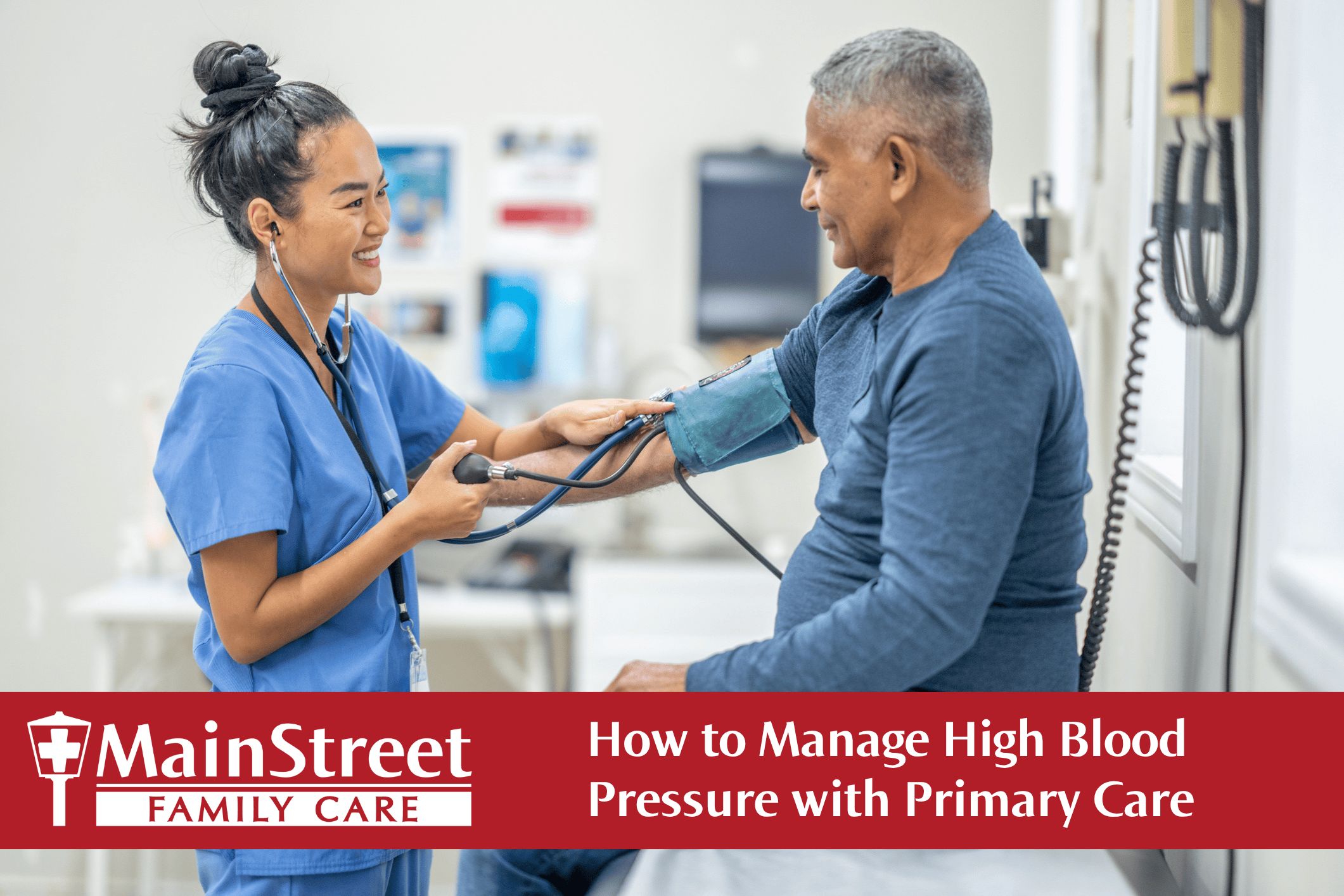
High blood pressure is one of the most common health conditions, and many people do not even realize they have it. It often develops without noticeable symptoms, which is why it is sometimes called a “silent condition.”
The good news is that high blood pressure can be managed effectively with the right care and guidance.
At MainStreet Family Care, our providers offer primary care services to help monitor, manage, and treat high blood pressure so you can stay on track with your long-term health.
What High Blood Pressure Means
Blood pressure measures the force of blood moving through your arteries. When that pressure stays consistently high, it can put extra strain on your heart and blood vessels.
Over time, unmanaged high blood pressure can increase your risk for:
-
Heart disease
-
Stroke
-
Kidney problems
Because it often does not cause symptoms early on, regular checkups are key to identifying it. You can learn more about what to expect during a visit in our guide to annual physicals.
Lifestyle Changes That Help Lower Blood Pressure
For many patients, the first step in managing high blood pressure involves lifestyle changes.
Helpful habits include:
-
Reducing sodium intake
-
Eating a balanced, heart healthy diet
-
Staying physically active
-
Maintaining a healthy weight
-
Managing stress levels
These changes can make a meaningful difference and, in some cases, may reduce the need for medication.
When Lifestyle Changes Are Not Enough
In some cases, lifestyle changes alone may not fully control blood pressure.
A provider may recommend medication to help manage your levels more effectively. There are several types of blood pressure medications, and your provider will determine what is best based on your health history and needs.
It is important to take medication as directed and continue regular follow-ups to monitor progress.
How a Primary Care Provider Helps Manage Blood Pressure
Managing high blood pressure is not a one-time visit. It requires ongoing monitoring and adjustments over time.
A primary care provider can:
-
Check your blood pressure regularly
-
Track trends over time
-
Adjust medications if needed
-
Recommend lifestyle changes based on your health
Having a provider who understands your health history helps ensure your care is consistent and effective.
When to Get Your Blood Pressure Checked
Routine screening is one of the most important parts of prevention.
You should consider regular checks if you:
-
Have a family history of high blood pressure
-
Are over the age of 40
-
Have other risk factors such as diabetes or high cholesterol
-
Have not had your blood pressure checked recently
Even if you feel well, regular monitoring can catch changes early.
When to Seek Care
It is important to speak with a provider if:
-
Your blood pressure readings are consistently high
-
You have not been checked in over a year
-
You are experiencing symptoms such as headaches, dizziness, or chest discomfort
If you are ever unsure, it is always appropriate to get evaluated.
We’re Here to Support Your Health
At MainStreet Family Care, we make it easy to stay on top of your health with convenient, compassionate care.
Our providers offer primary care services for patients of all ages and are here to help manage conditions like high blood pressure and support your overall well-being. We are open 7 days a week and accept most major insurance plans, including Medicaid and TRICARE.
To get started, sign up for the patient portal and schedule your first appointment.
Sign Up Now!
Step 1: Signup for the Patient Portal
Step 2: Schedule Your First Appointment
Register New Patient Portal Account
If you already have a portal account, simply log in.