
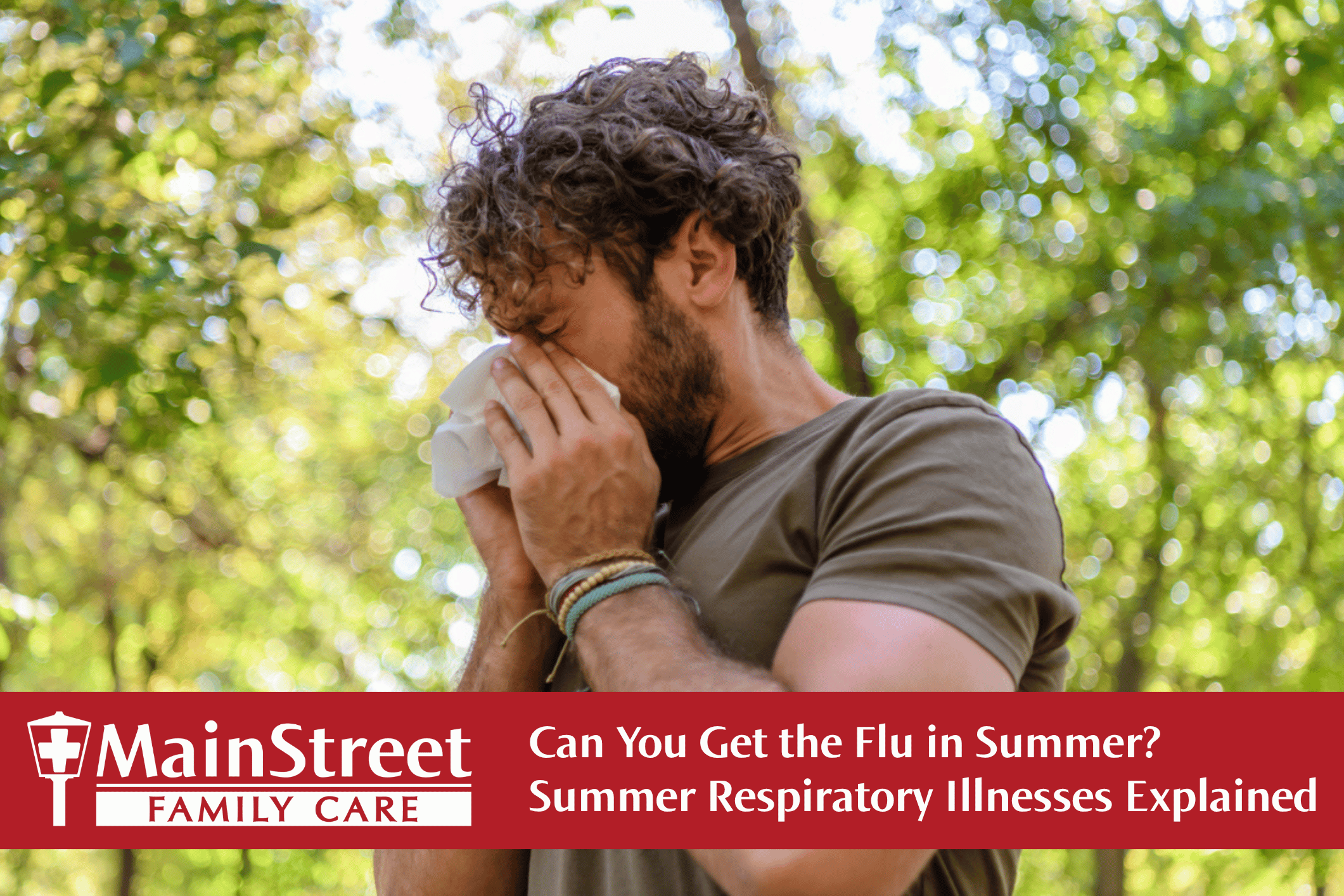
Most people associate the flu and respiratory illnesses with fall and winter. While respiratory viruses are more common during colder months, illnesses like the flu, COVID-19, and summer colds can still spread during warm weather.
Summer respiratory illnesses are real, and knowing how to recognize symptoms can help you seek care sooner when needed.
Can You Get the Flu During Summer?
The short answer is yes. While influenza activity is significantly lower during summer months, the virus doesn’t disappear.
Cases of flu in summer are less common, but they do occur. Summer flu symptoms in adults often include sudden fever, body aches, fatigue, headache, and respiratory symptoms.
Summer travel and large gatherings can also increase the spread of respiratory viruses. Crowded airports, theme parks, camps, and family reunions can all make transmission easier.
COVID-19 and Respiratory Illness in Warmer Months
COVID-19 (COVID) has changed the respiratory illness landscape in a major way. Unlike influenza, COVID does not follow a strict seasonal pattern. Surges have occurred during summer months, and the virus continues to circulate year-round. COVID-19 continues to circulate year-round rather than following a strict seasonal pattern.
COVID symptoms in summer can include fever, cough, sore throat, congestion, fatigue, and sometimes gastrointestinal complaints. Some people experience a loss of taste or smell, though this symptom has become less universal with newer variants.
If you have been exposed to someone with COVID or are experiencing respiratory symptoms, testing is straightforward and available. If you are unsure whether you need to be tested or what to do with your results, a primary care provider can help you navigate next steps.
How Symptoms Can Overlap With Seasonal Allergies
Summer allergies are very common, particularly in areas with high grass, weed, and mold pollen counts. Allergy symptoms include sneezing, runny nose, itchy and watery eyes, and nasal congestion. This overlap can make it difficult to tell the difference between COVID vs allergies without testing.
A few general distinctions can help when looking at allergies vs illness. Allergies typically don’t cause fever, body aches, or significant fatigue. Allergy symptoms tend to stay relatively consistent rather than progressively worsening over several days. Allergy symptoms also often improve with antihistamines in a way that viral illness symptoms generally do not.
That said, self-diagnosis can be tricky, and testing is always the most reliable way to know what you are dealing with.
When to Seek Urgent Care for Respiratory Illness
Most mild respiratory illnesses can be managed at home with rest, fluids, and over-the-counter symptom relief.
However, there are situations where it is time to seek care.
Seek out seek out urgent care services if you have any of the following:
- High or persistent fever
- Difficulty breathing or shortness of breath
- Chest tightness or pain
- Severe sore throat with difficulty swallowing
- Symptoms that worsen after several days instead of improving
If you are in a high-risk group, including older adults, those with chronic conditions, or those with compromised immune systems, a lower threshold for seeking care makes sense.
Reducing Spread During Summer Travel and Gatherings
Covering coughs and sneezes, washing hands frequently, and staying home when you are sick remain the most effective strategies for reducing the spread of respiratory illness regardless of the season.
If you are traveling, hand hygiene at airports, rest stops, and shared spaces is especially important. If you develop symptoms during a trip, try to isolate from others in your travel group and consider seeking care locally rather than traveling while infectious.
Want more helpful information? Check out summer health and safety tips guide.
MainStreet Family Care is open 7 days a week! Testing for flu, COVID-19, and other illnesses is available so you can get answers quickly. Register online to save your spot in line. Online registration is not an appointment, but it can help reduce in-clinic wait times by adding you to the queue before you arrive.