

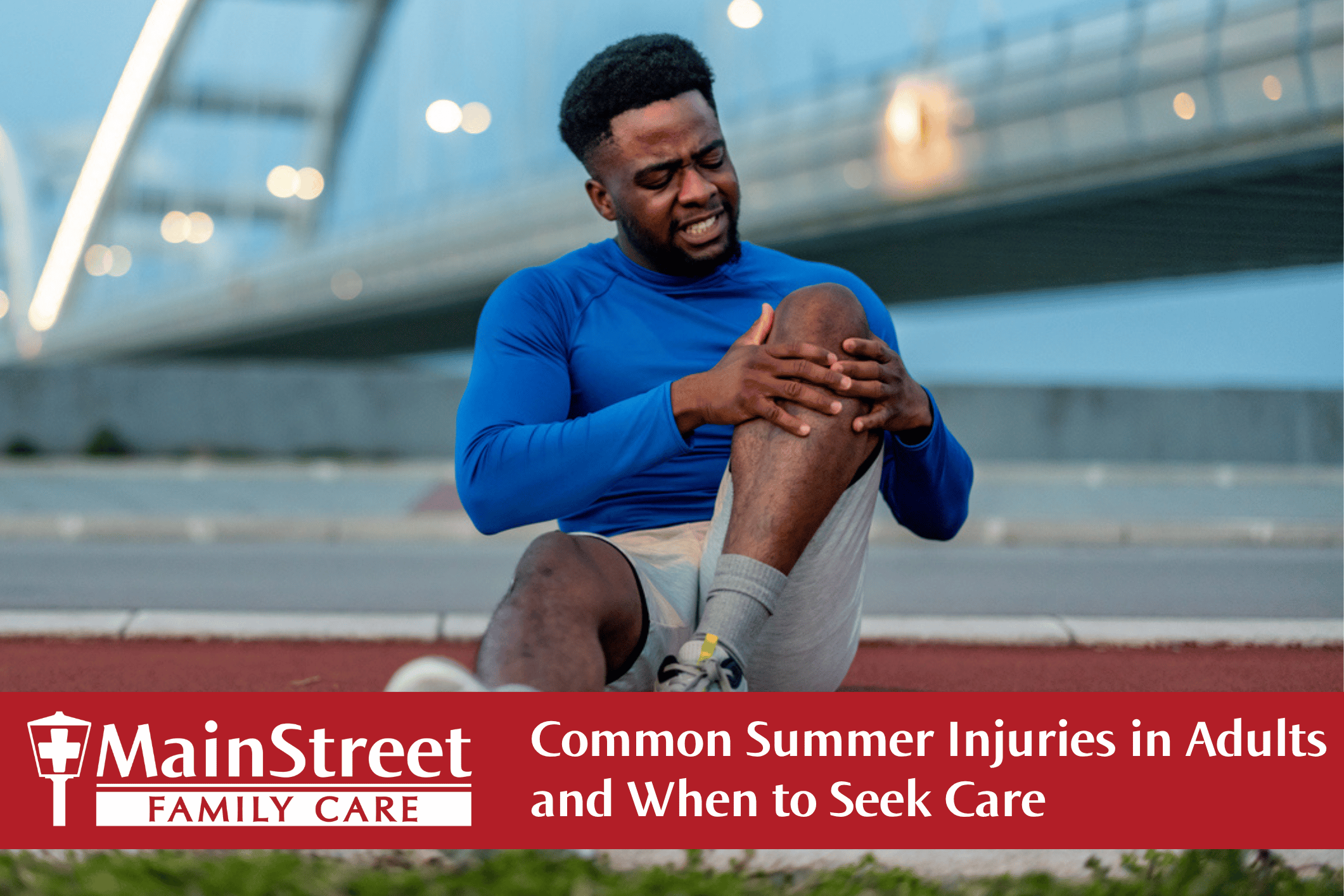
Summer often means more outdoor activity, sports, travel, yard work, and recreational fun. For many adults, it also brings a higher risk of accidental injuries.
Most summer injuries are minor and can be managed at home with basic first aid. But some need professional attention, and knowing when to make that call is just as important as knowing how to treat the injury in the moment.
The Most Common Summer Injuries in Adults
Many common summer injuries are preventable with a little awareness and preparation.
Sprains and strains are among the most frequent injuries urgent care providers see during summer. They typically happen during outdoor sports, hiking, yard work, or just stepping off a curb the wrong way. A sprain involves the ligaments around a joint, while a strain involves a muscle or tendon. Both cause pain, swelling, and limited range of motion.
Cuts and scrapes are almost inevitable during summer. Gardening, cooking outdoors, DIY projects, and recreational activities all create opportunities for minor cuts. Most are superficial and heal well with cleaning and basic wound care. Deeper or more jagged cuts may need medical attention.
Burns become more common in summer due to grilling, bonfires, and extended sun exposure. Sunburns are the most widespread, but thermal burns from grills and fire pits are also seen regularly. First-degree burns, which affect only the outer layer of skin and cause redness and mild pain, can typically be managed at home. Second-degree burns, which cause blistering and deeper skin damage, usually need to be evaluated by a provider.
Third-degree burns are a medical emergency. These burns can be life-threatening and require immediate emergency care.
Sports injuries in adults become more common during summer when activity levels increase. Knee pain, shoulder injuries, back strain, and ankle sprains are frequent complaints from adults who play recreational sports or push a bit harder than usual on the pickleball court or hiking trail.
Overall, increased summer activity often means a greater risk of minor injuries.
Minor Injuries You Can Treat at Home
Not every mishap needs a visit to urgent or primary care.
For sprains and strains, the standard approach is RICE: rest, ice, compression, and elevation. Apply ice wrapped in a cloth for 20 minutes at a time, keep the injured area elevated when possible, and avoid activities that increase pain. Over-the-counter anti-inflammatory medications can help manage discomfort.
For minor cuts, rinse the wound thoroughly under clean running water, apply an antiseptic, and cover it with a bandage. Change the bandage daily and watch for any signs of infection.
For first-degree sunburns, cool the skin with a damp cloth, apply aloe vera or a gentle moisturizer, and stay out of the sun while healing. Keep hydrated, as sunburns draw fluid toward the skin surface. Avoid using petroleum jelly or heavy oil-based products immediately after a sunburn, since they can trap heat against the skin.
Signs That Medical Care Is Needed
Some injuries look minor at first but turn out to need professional evaluation. Here are signs it is time to be seen.
A possible fracture should be evaluated even if you aren’t certain the bone is broken. Significant swelling, deformity, inability to bear weight, or intense pain that doesn’t ease with ice and rest are all reasons to get an X-ray. A sprain and a fracture can feel similar in the early hours after an injury.
Deep cuts that gape open, do not stop bleeding after 10 to 15 minutes of steady pressure, or involve areas like the face, hands, or joints may need stitches or other wound closure. A provider can also assess whether the cut needs antibiotic coverage.
Common signs of infection in a cut include increasing redness, warmth, swelling, pus, red streaks around the wound, or fever. These should be evaluated as soon as possible; infections can spread quickly.
When to Go to Urgent Care for Summer Injuries
Urgent care is often the right choice for sprains, strains, minor burns, cuts that may need stitches, suspected non-severe fractures, and infections. Urgent care can provide X-rays, wound care, splinting, and prescriptions in one convenient visit.
Go to the emergency room if an injury involves significant bleeding that will not stop, a suspected fracture of the spine or pelvis, a head injury with confusion or loss of consciousness, or burns that are large or involve the face, hands, feet, or genitals.
Make sure to read our summer health and safety tips guide to learn more and stay ready when you head outdoors.
MainStreet Family Care is open 7 days a week! Register online to save your spot in line. Online registration is not an appointment, but it can help reduce in-clinic wait times by adding you to the queue before you arrive.