

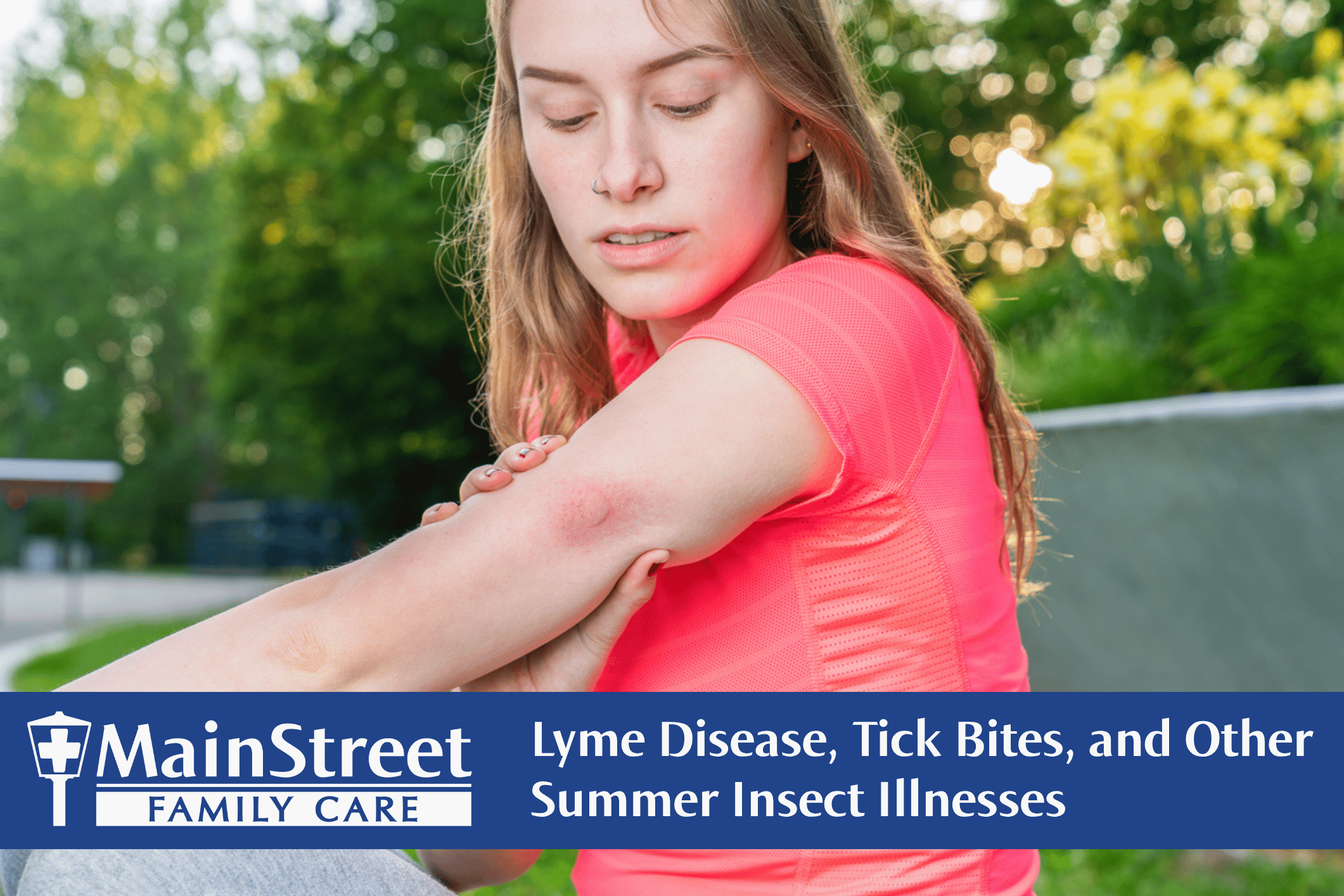
Spending time outdoors is one of the best parts of summer, but bug bites and tick exposure can sometimes lead to illness.
Most insect bites are minor, but some can cause allergic reactions, skin infections, or tick-borne diseases like Lyme disease.
Understanding tick exposure, Lyme disease symptoms, and the signs of allergic or infected bites can help you respond quickly and appropriately.
Common Summer Insect Bites and Stings
Mosquitoes, bees, wasps, fire ants, and ticks are the most frequent offenders during summer months. Most bites and stings cause temporary redness, swelling, and itching at the site. These local reactions typically improve within a day or two with basic care, as long as you resist the urge to scratch at them.
Ticks are a separate category of concern, however, because of their potential to transmit diseases, including Lyme disease, Rocky Mountain spotted fever, and others depending on the region. Ticks often attach in hidden areas such as behind the knees, in the hairline, around the waist, and in the armpits, so a thorough check after outdoor time in wooded or grassy areas is an important habit.
Tick Exposure and Lyme Disease
Lyme disease is transmitted by infected black-legged ticks, sometimes called deer ticks. Not every tick bite leads to Lyme disease, but the risk increases when a tick remains attached for more than 36 to 48 hours. According to the CDC, nearly 90,000 Lyme disease cases were reported in the United States in 2023, making it one of the most common tick-borne illnesses in the country.
Early Lyme disease symptoms typically appear within 3 to 30 days of a tick bite.The most recognizable sign is an expanding circular rash, often described as looking like a bull’s-eye, though not all cases produce this rash.
Other early symptoms include fever, chills, fatigue, muscle and joint aches, and headache. If Lyme disease isn’t treated, it can progress to affect the joints, heart, and nervous system over time.
Early diagnosis and a course of antibiotics are effective at treating Lyme disease. If you develop tick bite symptoms like rash, fever, fatigue, or body aches, it is important to seek evaluation promptly.
How to Safely Remove a Tick
If you find an attached tick:
- Use fine-tipped tweezers to grasp the tick as close to the skin’s surface as possible
- Pull upward with steady, even pressure without twisting or jerking
- Clean the bite area with rubbing alcohol or soap and water after removal
- Don’t crush the tick with your fingers
- Don’t use petroleum jelly or heat to try to remove it, as these methods are not effective and may increase the risk of disease transmission.
- Save the tick in a sealed bag if possible, and note the date of the bite. This information can be helpful if you develop symptoms later and need to be seen by a provider.
Normal vs. Concerning Bite Reactions
A normal reaction to a bug bite includes localized redness, swelling, and itching that peaks within a few hours and then gradually fades. A small bump that itches for a day or two is expected.
A concerning reaction is one that spreads, worsens over time, or is accompanied by symptoms beyond the bite site.
Signs of an infected insect bite include:
- Increasing redness and warmth
- Swelling that expands
- Pain
- Pus
- Fever
Signs of an allergic reaction include:
- Hives spreading beyond the bite area
- Swelling of the face or throat
- Difficulty breathing
- Dizziness
- Lightheadedness or a rapid drop in blood pressure
Severe allergic reactions, called anaphylaxis, are life-threatening and require an immediate call to 911.
When to Seek Care for a Tick Bite or Insect Illness
Seek urgent care services when a bite site shows signs of infection, when you have found a tick and are concerned about possible disease exposure, or when early symptoms of Lyme disease are present. A provider can evaluate the bite, order testing when appropriate, prescribe antibiotics when appropriate and provide guidance about monitoring for tick-borne illness symptoms
You can also speak with your primary care provider about preventive antibiotics if you have had a known high-risk tick exposure and are in an area where Lyme disease is prevalent.
For more info, check out our summer health and safety tips guide before you head outdoors.
MainStreet Family Care is open 7 days a week! Register online to save your spot in line. Online registration is not an appointment, but it can help reduce in-clinic wait times by adding you to the queue before you arrive.