

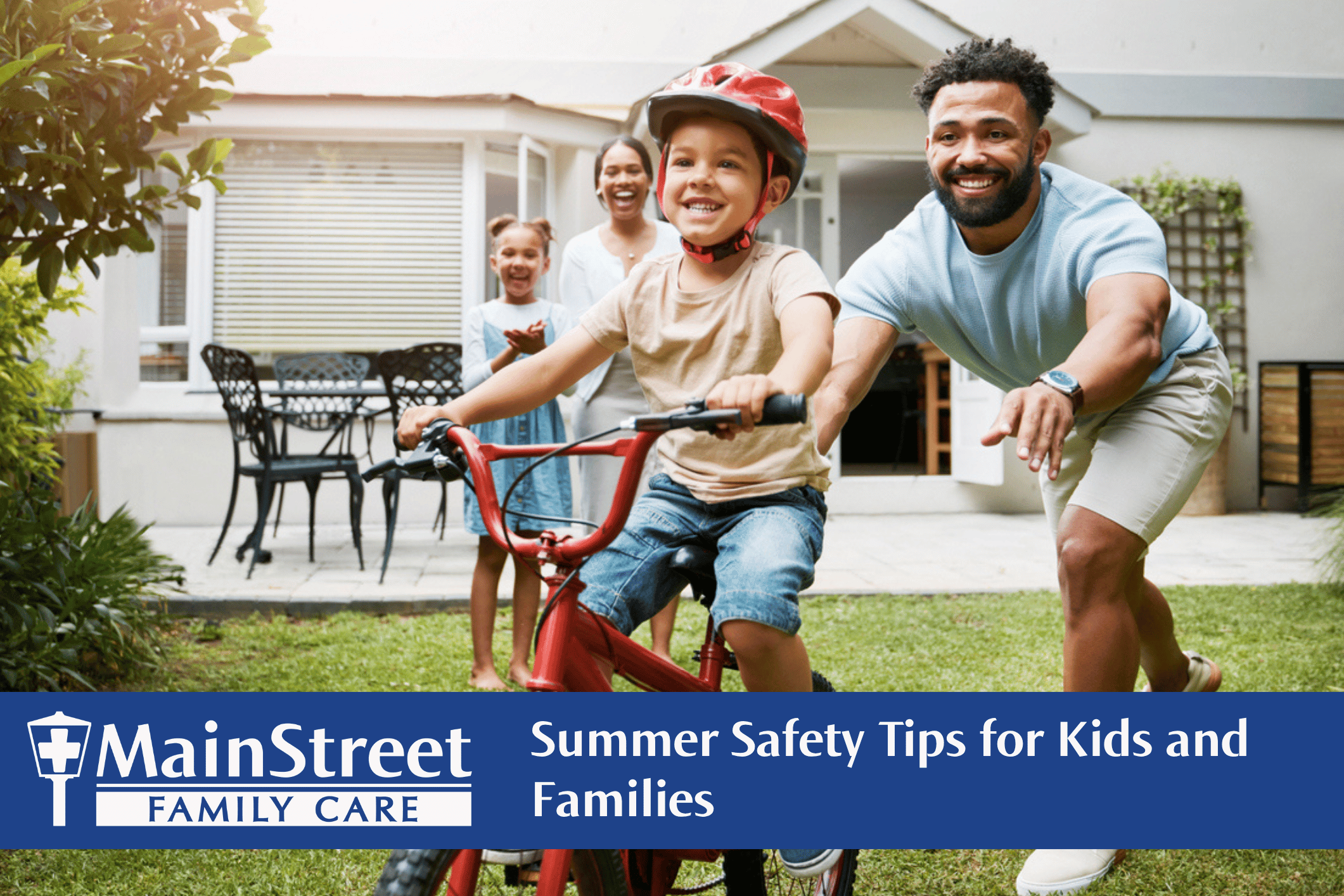
Summer gives kids and families more opportunities for outdoor play, vacations, swimming, sports, and family activities.
Along with the fun comes a few seasonal safety concerns that parents should keep in mind.
Children are more vulnerable to heat, dehydration, sun exposure, and certain summer injuries, which makes kids summer safety especially important during hot weather months.
Heat Safety for Children: Why Kids Are More Vulnerable
Children’s bodies heat up faster than adult bodies, and they cool down less efficiently. Kids also have a lower body weight, which means dehydration can happen more quickly and with less fluid loss.
To make things more challenging, children often don’t notice or report that they’re hot or thirsty until they’re already well past the point of needing fluids. Kids are often too focused on play to notice early signs of thirst or overheating.
Young children may not recognize or communicate symptoms of overheating or dehydration early enough for adults to notice right away.
Hydration Tips for Children
Common dehydration symptoms in children include decreased urination, dry lips and mouth, irritability, tearless crying, and unusual tiredness. If a child shows these signs, offer fluids and rest in a cool area, and seek care if symptoms do not improve.
To help kids stay hydrated during summer activities:
- Encourage water breaks every 30 to 60 minutes during outdoor play
- Offer fluids more frequently during sports or extreme heat
- Include hydrating foods like watermelon, grapes, and oranges
- Remind children to drink before they feel thirsty
Finally, model healthy hydration habits by drinking enough water yourself. Kids often follow the example set by adults around them.
Child Water Safety Reminders for Families
A major part of summer injury prevention is guarding against one particular threat: drowning.
Drowning is one of the leading causes of unintentional injury death in children, and it can happen quickly and silently.
Always supervise children around water, whether that is a pool, lake, river, or even a backyard kiddie pool. Designate a responsible adult as the “water watcher” and avoid distractions during that role.
Swim lessons are one of the most effective ways to reduce drowning risk. Life jackets should be worn on boats and in open water, and they should be properly fitted for the child’s size and weight. Floaties and inflatable swim aids are not substitutes for a properly fitted life jacket. Use only flotation devices approved by the U.S. Coast Guard.
Sun Safety and Sunscreen Basics
Children need sun protection every time they spend time outdoors. Apply a broad-spectrum sunscreen with SPF 30 or higher at least 15 to 30 minutes before going outside, and reapply every two hours or after swimming and toweling off. Don’t forget ears, the back of the neck, and the tops of the feet.
For infants under six months, sun avoidance and protective clothing are the primary strategies rather than sunscreen. A wide-brimmed hat and lightweight, protective clothing go a long way toward shielding young skin.
Bug Bite and Tick Prevention
Apply an insect repellent appropriate for children’s skin before outdoor activities in wooded or grassy areas. Products containing DEET, picaridin, or IR3535 are effective options, though insect repellents should always be used according to age guidelines and product instructions.
After outdoor play, do a thorough tick check, paying special attention to the scalp, behind the ears, in the armpits, and around the waistband.
Hot Car Safety
A vehicle interior can heat up to dangerous temperatures very quickly, even on a mild day and even with the windows cracked.
Never leave a child unattended in a parked vehicle, even briefly. Make it a habit to check the backseat every time you exit the car, and if you see a child alone in a hot vehicle, call 911 immediately.
When to Seek Urgent Care for Kids During Summer
Seek urgent care for children who show signs of heat exhaustion that do not improve with shade and hydration, moderate to severe sunburns with blistering, injuries such as sprains or possible fractures, cuts that may need stitches, suspected swimmer’s ear, tick bites with concerning symptoms, or signs of dehydration that are not resolving.
If you are ever unsure whether your child’s symptoms need attention, it’s always okay to come in.
For more guidance, like kids summer health tips, check out our summer health and safety tips guide. You can also speak with your family’s primary care provider about any seasonal health questions specific to your children’s needs.
MainStreet Family Care is open 7 days a week! Summer care for your whole family is always within reach. Register online to save your spot in line. Online registration is not an appointment, but it can help reduce in-clinic wait times by adding you to the queue before you arrive.